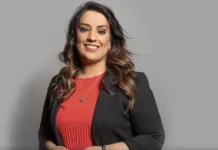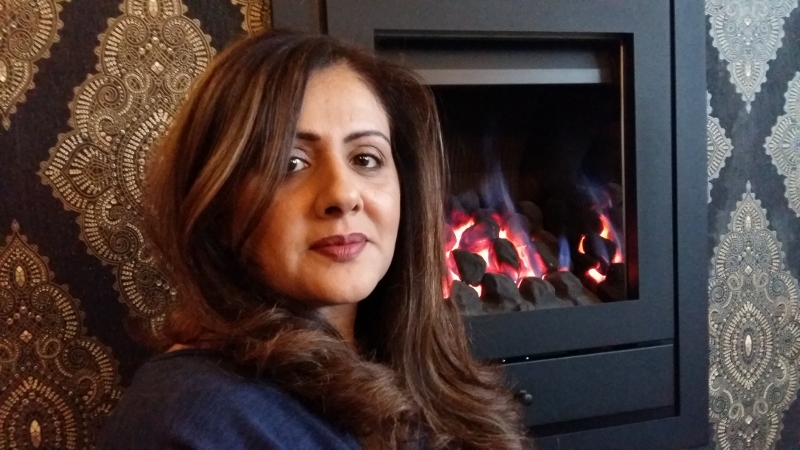

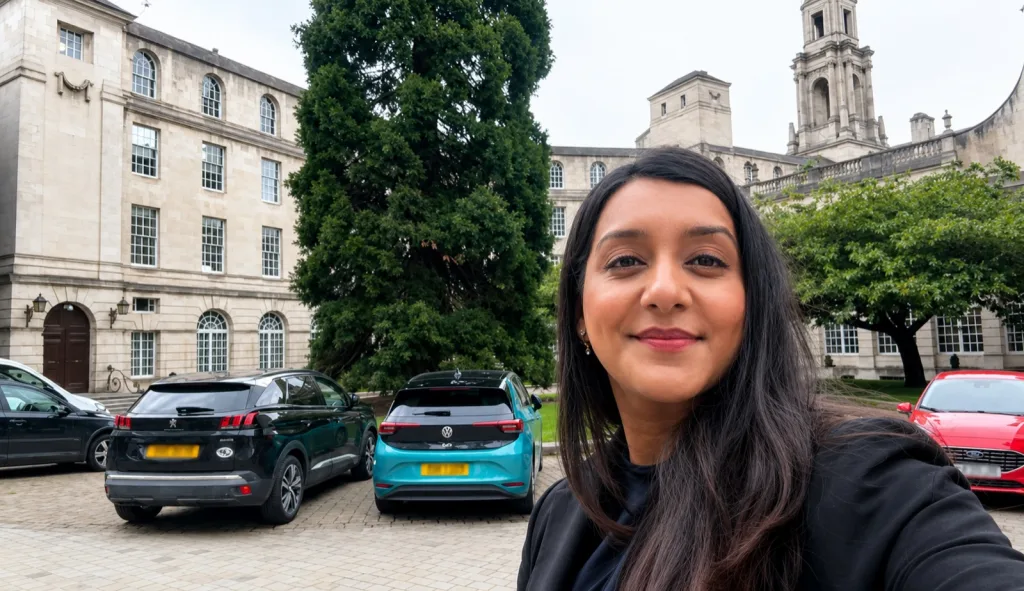
Ten years ago, when Salma Arif became one of the city’s youngest councillors, she sat down with Asian Express and spoke about growing up in Harehills with honesty, pride and deep affection for the community that shaped her.
“I am the product of Harehills,” she said back then. This week, those words feel more powerful than ever.
Because the girl from Harehills who once wondered whether people like her truly belonged in politics has just made history – becoming the first Muslim Deputy Leader of Leeds City Council.
And at a time when British Muslims are increasingly facing hostility, suspicion and toxic public rhetoric, her appointment feels about far more than politics.
For many across Yorkshire’s Muslim communities, her appointment feels bigger than politics. It feels personal.
Salma’s story has never been one of polished political ambition or carefully manufactured image. It is rooted in family, identity and community – in the everyday realities of Leeds life that so many people across Yorkshire instantly recognise.
Her forefathers arrived in Leeds in the 1930s after serving with British Forces during the Second World War. Like thousands of immigrants who helped rebuild Britain, they came searching for opportunity, stability and a future for the generations that would follow.
Back then, they could never have imagined that one day their granddaughter would help lead one of the UK’s biggest cities.
But this week, she did exactly that.
In a deeply personal statement shared following her appointment, Salma reflected on that journey.
“Never in a million years would young me from Harehills have believed this was possible,” Salma wrote. I hope young people across our communities can look at this and know that where you come from should never limit where you can go.”
She added: “My forefathers, who first arrived in Leeds in the 1930s, would never have deemed it possible that one of their own would one day hold this position.”
There is something deeply relatable about the way she speaks. No political slogans. No performance.
Just gratitude, disbelief and a very real understanding of what this moment means – particularly for communities who often feel overlooked, talked about rather than listened to, and visible only when headlines turn negative.
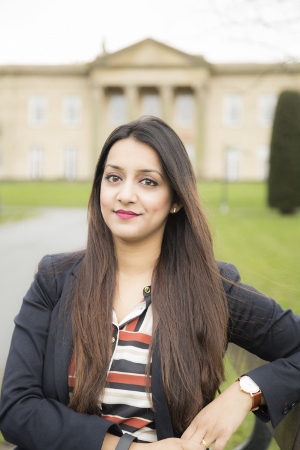
Since first being elected in 2016 with one of the city’s largest majorities, she has built a reputation as a grounded, community-focused politician who remained closely connected to the realities of inner-city Leeds long after entering civic office.
Over the years, she has become one of the city’s most recognisable voices on inequality, youth opportunity, public health and community cohesion.
She has spoken openly about poverty in Harehills during the cost-of-living crisis, warning families were reaching breaking point as food bank queues stretched for hours.
She has championed accessible sport, culture and community investment, including backing major regeneration projects and sports facilities designed to create opportunities for young people in underserved areas.
And during some of Leeds’ most difficult moments – including last year’s disorder in Harehills – she was among the local figures publicly urging calm, working to reassure residents and protect community relations as tensions escalated.
But perhaps most significantly, Salma’s rise comes at a time when many British Muslims feel increasingly alienated from political discourse altogether.
Across the UK, concerns around Islamophobia, online hate, far-right rhetoric and hostile public narratives have intensified in recent years. Muslim politicians, particularly women, have frequently found themselves subjected to abuse simply for existing visibly in public life.
Against that backdrop, Salma Arif’s appointment carries symbolic weight far beyond Leeds Civic Hall.
It is a reminder that representation matters – not as tokenism, but as proof that British institutions still have the capacity to reflect the communities they serve.
Perhaps that is why this moment feels so significant.
“Growing up in Harehills shaped who I am,” Salma said this week.
“It taught me resilience, compassion and the importance of fighting for people whose voices are too often overlooked.
“To now be in a position to help lead the city I love is something I will never take for granted.”