
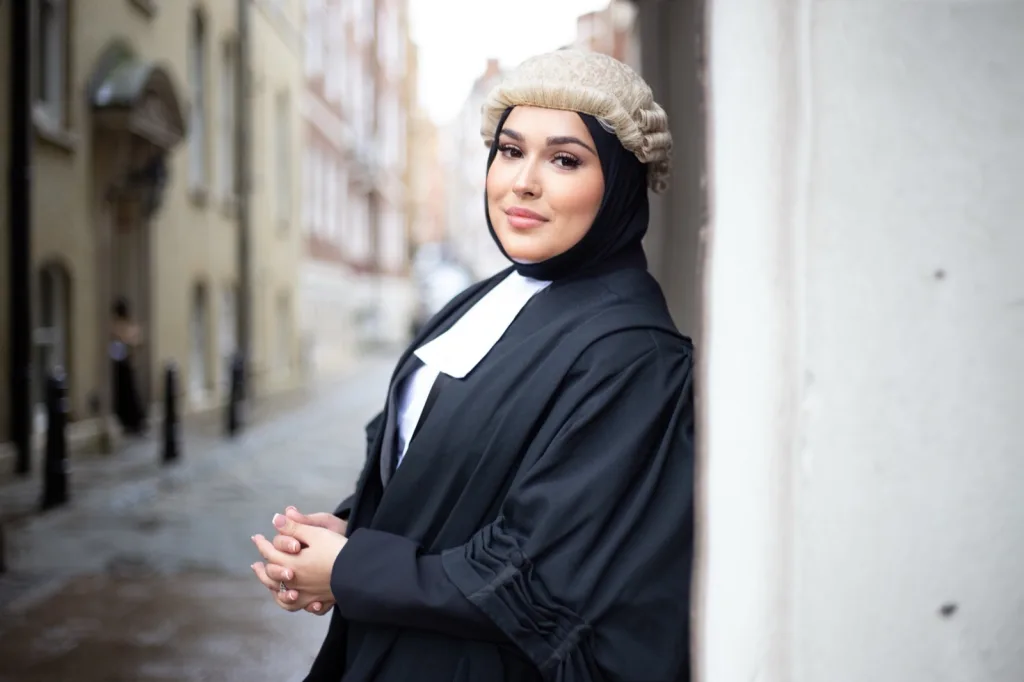
The daughter of a taxi driver from Bingley, and the first in her family to attend university, Rukhsar Jahangir has become the first barrister – and the first woman in her family to be Called to the Bar.
At just 24, her rise is about more than legal success. It is about class, courage and changing what an entire generation believes is possible.
Some achievements change a life. Others change the direction of a family.
For Rukhsar, being Called to the Bar was never just about earning a title. It was about stepping into a world no one in her family had entered before – and proving that the doors of Britain’s most exclusive professions do not belong only to the privileged.
It is a milestone she carries with pride – but also with the weight of everything it took to get there.
“I’m proud to say I’m the first barrister in my family,” says Rukhsar. “And the first woman in my family to be Called to the Bar.”
Raised in a modest household by a father who spent most of his life working as a taxi driver and a mother who later worked in education after dedicating herself to raising six children, Rukhsar did not grow up surrounded by lawyers, judges or professional networks.
What she did grow up with, however, was something far more powerful: belief.
Her parents built a home, she says, that was “safe from negativity and full of encouragement” – a place where ambition was protected, not questioned. Her mother quietly made sure she never missed an opportunity, balancing lifts, timing and costs behind the scenes so her daughter could keep showing up.
“She understood something before I did,” says Rukhsar.
“Exposure builds confidence, and confidence builds courage.”
Courage was forged long before the photographs in wig and gown
Behind the polished milestone was a much harder reality: three jobs while studying, long shifts in healthcare, private health struggles, relentless pressure and the kind of self-doubt that rarely makes it onto social media.
“Resilience is built in private,” she says.
“That’s where the real work happened.”
For many children of working-class and immigrant families, success is never purely individual. It is collective. It is shaped by sacrifice, responsibility and the quiet determination to make your parents’ struggle mean something.
“‘First’ carries uncertainty because there’s no blueprint,” she says.
“It means figuring out applications, networking and professional systems alone. It means learning the unspoken rules without guidance. But it also carries power. Being the first means you change what feels possible for everyone after you.”
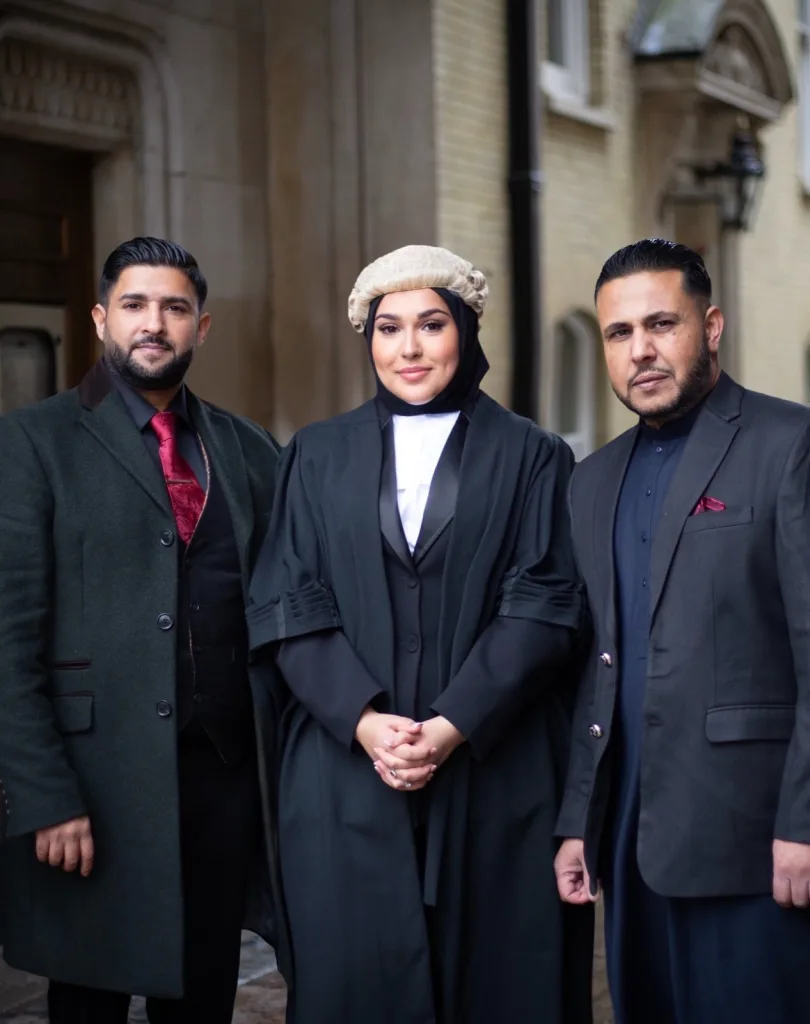
Rukhsar is the eldest and only girl among five younger brothers – and she speaks of them with visible pride.
During exam seasons and long nights of revision, they helped with chores, brought her favourite snacks and sat beside her through the stress, even when they did not fully understand what she was studying.
Today, one of her younger brothers, now 14, is already inspired to pursue a career in law after watching her be Called to the Bar.
“Representation doesn’t just change rooms,” says Rukhsar. “It changes households.
It changes what younger siblings grow up believing is possible.”
In the three months since her Call, Rukhsar has already been working alongside a barrister in the Military Court, specialising in military law – an intellectually demanding arena that has sharpened her advocacy and confirmed what she already knew: this is not simply a title, but a responsibility.
Yet for all the prestige of the profession, it is one memory that seems to matter most- the moment her mother and father saw her in her wig and gown.
“Seeing their pride, their relief, their joy, all in that single moment, made every struggle worth it,” she says.
For the next “first in the family” girl watching from the sidelines, Rukhsar’s message is clear: “You do not need connections to build credibility. You do not need to shrink yourself to succeed. You do not need permission to dream beyond what you’ve seen.
“I am not here because it was easy. I am here because I refused to be reduced.”