

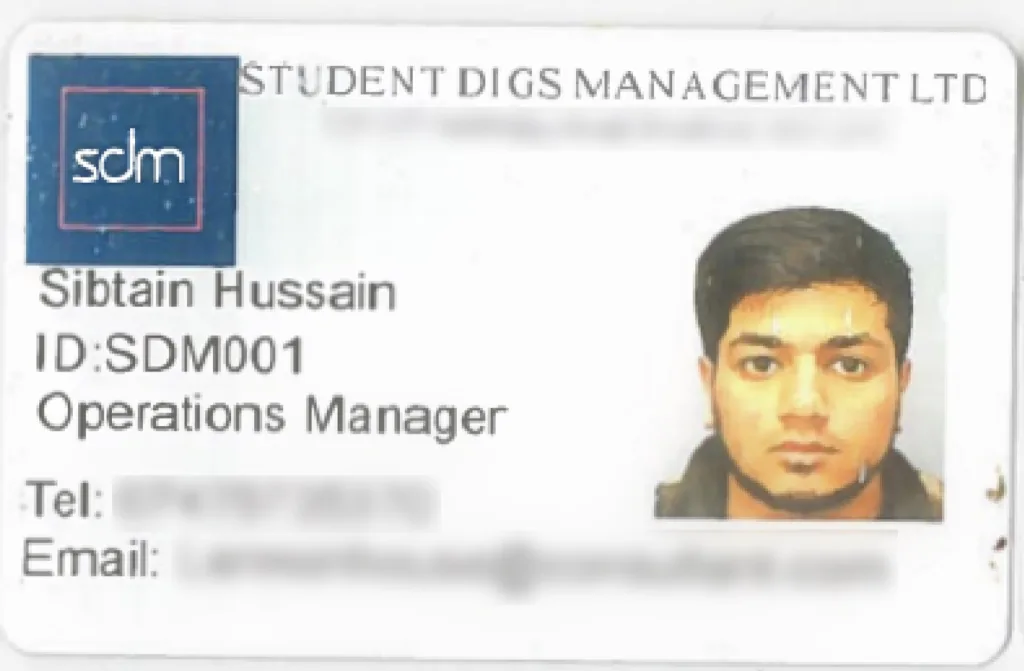
A student who tried to fleece desperate university applicants out of nearly £50,000 has been jailed after investigators uncovered a cold and calculated scam that preyed on young people chasing a better future.
Sibtain Hussain, 32, from Bradford, targeted international students applying to UK universities – bombarding them with demands for money for fake “financial checks”, “student services” and bogus “accommodation deposits”.
Victims believed they were paying legitimate university fees.
Instead, they were being conned.
Hussain used stolen applicant data to launch what prosecutors described as a relentless fraud campaign, contacting more than 200 hopeful students by phone and email and demanding payments of up to £3,200 at a time.
In total, 23 students sent more than £48,000, although banks managed to block many transfers before the full scale of the scam was realised.
Investigators warned the plot had the potential to generate almost £500,000 in illegal profits.
The fraud stemmed from a serious breach at Lancaster University, where unauthorised access was gained to an internal computer system in 2018 and sensitive applicant information was stolen.
Hussain, who began studying at the university in 2017, obtained access to the data and used it to target applicants with alarming persistence.
To avoid detection, he created multiple phone numbers, email addresses, aliases and bank accounts, leaving victims confused and fearful their applications – and futures – were at risk.
Lancaster University reported the breach to the National Crime Agency in July 2019 after receiving disturbing reports that applicants were being approached for suspicious payments.
The NCA launched an investigation, tracing the scam through bank accounts and victim testimony.
Officers arrested Hussain in Bradford in July 2019, seizing two mobile phones and a wallet containing evidence linking him directly to the crimes.
He initially denied wrongdoing, but later pleaded guilty at Leeds Crown Court in October 2025.
This week he was sentenced at the same court to four and a half years in prison for fraud, with a further 12 months for money laundering.
The case has prompted fresh warnings for students – particularly international applicants – to remain vigilant against criminals exploiting the pressures and anxieties of university admissions.