


For most people, kidney stones are painful but treatable. However, when they occur repeatedly – especially in children, teenagers or young adults – they may be a sign of something much rarer: Primary Hyperoxaluria Type 1 (PH1), a genetic disease that often goes undiagnosed until significant kidney damage has already occurred.
Although PH1 affects only around one to three people per million worldwide, experts believe it is under-diagnosed because its symptoms resemble those of more common kidney conditions. Raising awareness is therefore essential to help people receive an earlier diagnosis and appropriate specialist care.
A rare disease that starts in the liver
Despite primarily affecting the kidneys, PH1 originates in the liver. The condition is caused by inherited changes in the AGXT gene. When the gene does not function properly, the liver produces excessive amounts of oxalate, a waste product that the body cannot break down.
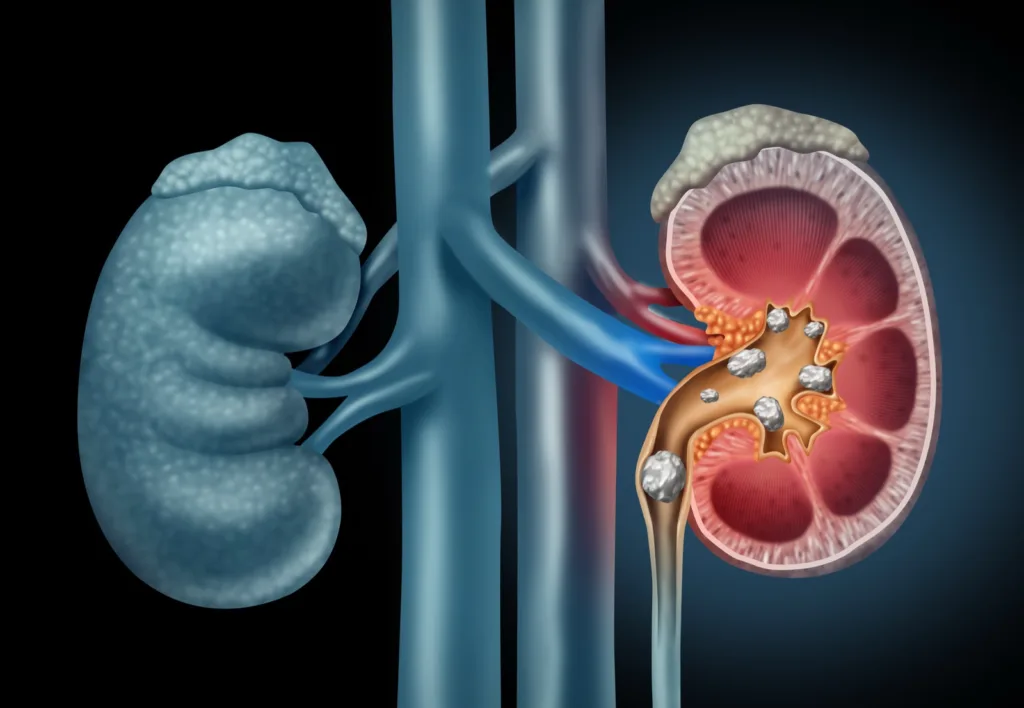
The kidneys must filter this excess oxalate, which combines with calcium to form crystals. These crystals can lead to recurrent kidney stones, calcium deposits in the kidneys (nephrocalcinosis) and progressive kidney damage. As kidney function declines, oxalate may also accumulate elsewhere in the body.
Recognising the signs
Recurrent kidney stones at a young age are one of the main warning signs of PH1, although not everyone experiences the disease in the same way. Other symptoms may include blood in the urine, back or side pain, urinary tract infections and declining kidney function. Because PH1 is inherited, a confirmed diagnosis may also be relevant for other family members, who could benefit from genetic testing.
Why diagnosis matters
PH1 is often mistaken for more common causes of kidney stones, meaning many patients experience years of investigations before the underlying condition is identified. By the time PH1 is diagnosed, some people have already developed chronic kidney disease or kidney failure.
Earlier recognition allows patients to receive specialist assessment and management before irreversible kidney damage occurs.
Diagnosis and long-term care
Diagnosis usually involves reviewing a patient’s medical and family history, alongside urine and blood tests to assess oxalate levels and kidney function. If PH1 is suspected, genetic testing can confirm the diagnosis, while imaging may identify kidney stones or calcium deposits.
Because PH1 is rare and complex, patients are often managed by multidisciplinary teams including nephrologists, urologists and genetic specialists.
Living with PH1
PH1 requires lifelong monitoring and ongoing management to help preserve kidney function. Alongside the medical aspects, patients and families often face emotional and practical challenges. Access to specialist care, reliable information and appropriate support can make a meaningful difference throughout the disease journey.
For anyone seeking to learn more, the Living with PH1 website provides educational resources for patients, families and caregivers, including information on symptoms, diagnosis, disease management and specialist care. The website also includes practical resources and patient stories to help people better understand living with PH1.
For more information, visit www.livingwithph1.eu

PH1-UK-00073 – 07/2026 – This content is funded by Alnylam Pharmaceuticals.