
As 2025 draws to a close, many British Muslims pause not only out of fatigue, but reflection. It has been a year that tested patience, principles and our shared sense of belonging. A year marked by grief and gratitude, strain and solidarity. Yet as 2026 approaches, there is also resolve – a quiet confidence that difficult years can still lead to renewal.
For many in Muslim communities, 2025 felt like living under heightened scrutiny. Global crises involving Muslims, acts of violence by extremists, and international conflicts repeatedly spilled into domestic debate.
Ordinary British Muslims found themselves asked, implicitly or explicitly, to explain, condemn or account for events far beyond their control. That experience was wearying, but it is not unique. Many minority communities know what it feels like to be viewed through the lens of collective responsibility rather than individual humanity.
The war in Gaza and the immense suffering of ordinary people sharpened those tensions. Across Britain, people of many backgrounds campaigned tirelessly calling for an end to civilian suffering and respect for international law. At times, empathy was lost in polarised public debate. For British Muslims, these moments carried a particular emotional weight, rooted in faith and conscience.
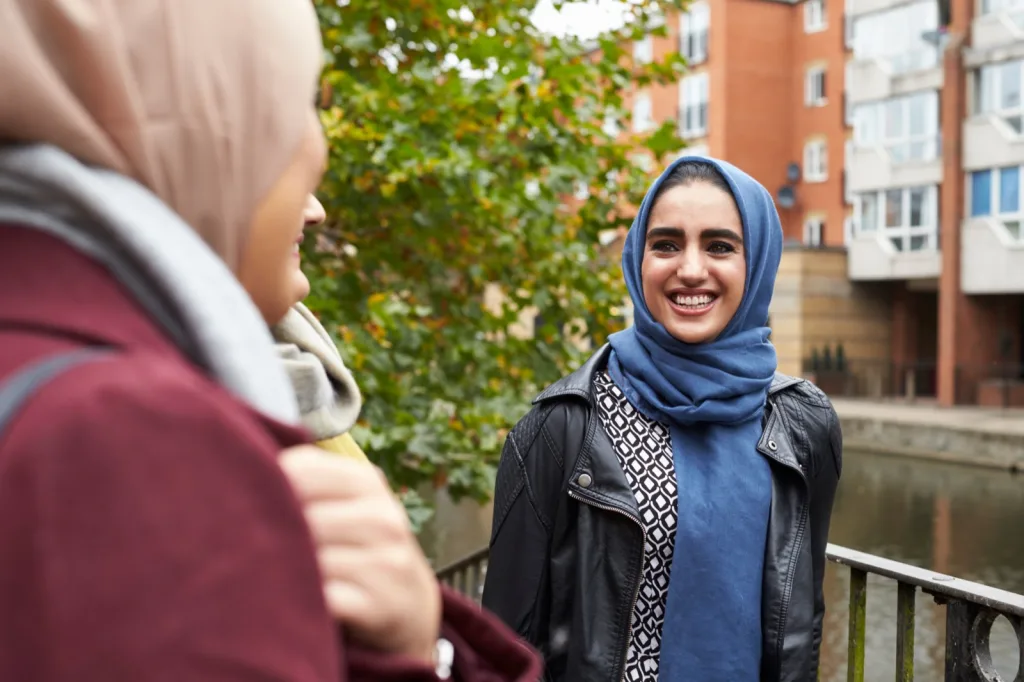
Anti-Muslim hostility continued to rise in 2025. Women wearing hijab continued to report harassment; mosques and Muslim graves were targeted. In the last few months, over 27 mosques were attacked or vandalised, according to British Muslim Trust. At the same time, moments such as the Unite the Kingdom march raised wider questions about national identity and belonging.
The framing and the language used at that march deeply unsettled Muslims and minority communities. But it is important to acknowledge that many Christians and faith leaders responded by reaffirming pluralism and rejecting exclusionary narratives promoted by the extreme far right. Those voices of solidarity matter, because cohesion is built not by uniformity, but by mutual respect.
Yet 2025 was not defined by division alone.
Across the country, mosques and community centres became spaces of service: food banks during the cost-of-living crisis, mental health support, youth mentoring and neighbourhood initiatives that served people of all backgrounds. These efforts rarely made headlines, but they reflected a simple truth – when communities invest locally, everyone benefits.
The year also highlighted the role many British Muslims play in public life as advocates for dignity, fairness and the rule of law. Speaking out for justice, whether at home or abroad, is not the preserve of any one group. It is a shared civic responsibility. That commitment sometimes came at a cost, but it also revealed how deeply interconnected Britain’s moral conversations have become.
Honesty, however, requires looking inward as well as outward. Like all communities, British Muslims must confront challenges within their own ranks.
Regressive cultural practices – including extremism, misogyny, abuse or racism, cause real harm and cannot be ignored or excused. Addressing these issues is not about appeasing critics; it is about protecting the vulnerable and upholding the ethical standards that our faith and law both demand. Accountability strengthens trust, both within communities and across society.
There were also signs in 2025 of a political and civic shift. Engagement among British Muslims is becoming more confident and more collaborative, rooted less in identity alone and more in shared concerns: fairness, opportunity, safety and social cohesion. This is a healthy development, not just for Muslims, but for British democracy as a whole.
None of this erases the emotional toll of the year. Watching global suffering unfold in real time, alarming rise in Islamophobia and domestic tensions – ranging from immigration crisis to cost of living crises, left many feeling drained and consider migration from Britain. But hardship also revealed something enduring: resilience.
Britain’s Muslim communities, like many others, are shaped by histories of migration, struggle and contribution. Parents and grandparents built lives in the face of exclusion and uncertainty, laying foundations through work, service and perseverance. That legacy continues to inform how challenges are met today.
Looking ahead, there is reason for hope. There are more people – neighbours, colleagues, journalists, faith leaders, willing to challenge anti-Muslim prejudice and anti-immigrant sentiments when they encounter them. There is a younger generation, confident in both identity and belonging, rejecting false binaries between Islam and British citizenship.
Faith, at its best, reinforces this hope. It teaches that hardship is not the end of the story, and that optimism is not denial, but commitment and a belief that societies can improve when people choose empathy over fear.
As 2026 begins, British Muslims are not asking for special treatment. Like many others, they ask for fairness, dignity and the chance to contribute without suspicion. To be seen not as symbols or stereotypes, but as fellow citizens invested in the country’s future.
As we look forward to 2026, the conviction that shared challenges can produce shared progress is necessary. Hope, in uncertain times, is not naïve, it is essential. It is with that spirit – grounded in honesty, shared responsibility and mutual respect that we move into the year ahead.