

“I will continue to speak up for the rights of the Palestinian people and to work for a lasting peace in the Middle East.”
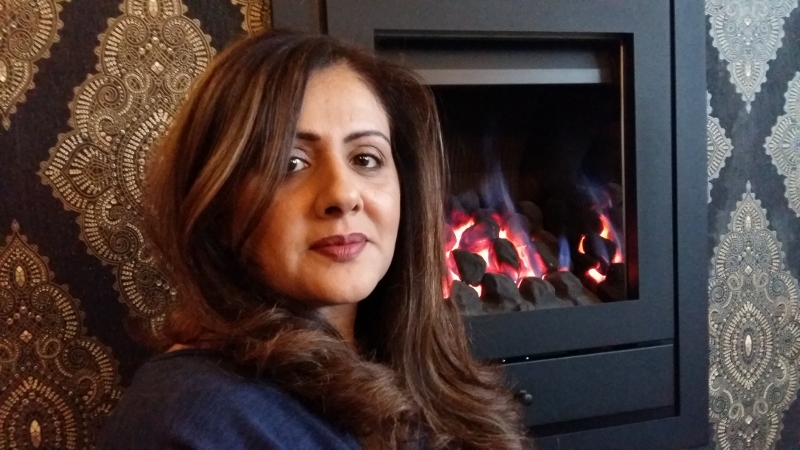
MP Naz Shah has vowed she will not be silenced after Israel banned her from entering the country amid an escalating diplomatic row with Britain.
The Labour MP, who has represented Bradford West for over a decade, is one of 11 British parliamentarians barred from entering Israel following UK Government action against trade with Israeli settlements in the occupied Palestinian territories.
Now, speaking to Asian Express, Naz Shah has made clear that the decision will not stop her speaking out over the treatment of Palestinians.
“The decision to prevent British parliamentarians from entering Israel will not silence me,” she says.
“Nor should attempts to restrict humanitarian organisations be allowed to undermine vital assistance to Palestinians who desperately need it.”
Her response puts the Bradford MP personally at the centre of a growing international dispute – and raises wider concerns over what she describes as attempts to silence those challenging the Israeli government’s conduct.
She adds: “In response to the UK Government taking action against trade with illegal Israeli settlements in the occupied Palestinian territories, the Israeli Government has chosen to retaliate against British parliamentarians, including myself, while British aid organisations working to support Palestinians have also faced threats of further restrictions.
“I have been consistent in speaking out against the oppression and injustice faced by the Palestinian people. I have consistently called for an end to the occupation and for a viable two-state solution, in which Palestinians and Israelis can live side by side in peace, security and prosperity.
“It is deeply concerning that, rather than engaging with legitimate criticism of its actions in Gaza and the occupied West Bank, the current Israeli Government is seeking to restrict and silence those who challenge its conduct.”
“The decision to prevent British parliamentarians from entering Israel will not silence me. Nor should attempts to restrict humanitarian organisations be allowed to undermine vital assistance to Palestinians who desperately need it.”
“I will continue to speak up for the rights of the Palestinian people and to work for a lasting peace in the Middle East; one founded on international law, justice and security for Palestinians and Israelis alike, and ultimately on a viable two-state solution.”
Why has she been banned?
The decision followed the UK Government’s announcement of measures targeting trade with Israeli settlements in the occupied territories.
Foreign Secretary Ed Miliband announced an import ban on goods from settlements alongside a sanctions regime targeting individuals and companies involved in financing, constructing, or facilitating settlement expansion.
The Government stressed the measures target settlements and settlement expansion, not Israel itself, and that Britain will continue supporting trade with Israel within the pre-1967 Green Line.
Israel responded with a series of countermeasures.
Israeli Foreign Minister Gideon Sa’ar said those subjected to entry restrictions had been involved in what his government described as “antisemitic and anti-Israel activity”, or had denied Israel’s existence.
These are allegations by the Israeli government and do not amount to independent findings against Shah.
Naz’s stated position explicitly supports a two-state solution in which Palestinians and Israelis live alongside one another in peace and security.
Just hours before Israel’s retaliation was announced, Naz Shah spoke in the House of Commons supporting the British Government’s action.
“The situation needed Britain to lead, and today Britain has led,” she told MPs.
She asked whether Britain would continue showing international leadership to pursue a two-state solution and ensure Palestinians could live “free of occupation”.
Diplomatic row deepens
MP Naz Shah is not the only British politician affected.
Jeremy Corbyn, Zarah Sultana, Diane Abbott, John McDonnell, Richard Burgon and Green MPs Hannah Spencer, Carla Denyer, Siân Berry, Ellie Chowns and Adrian Ramsay have also been barred.
Fahad Ansari, director of Riverway to the Sea, was also named – taking the total to 11 MPs and one other British national.
Israel’s response goes beyond the entry restrictions.
It has announced the closure of the British Consulate in Jerusalem, the removal of British representatives from the International Gaza Support Centre and an end to British involvement in training Palestinian Authority security forces in the West Bank.
For Bradford, a major international diplomatic dispute now has a distinctly local face – its MP has been barred from entering Israel after years of speaking publicly about Palestine, the occupation and the need for a two-state solution.
But Naz’s message following the ban is unequivocal: “The decision to prevent British parliamentarians from entering Israel will not silence me.”