

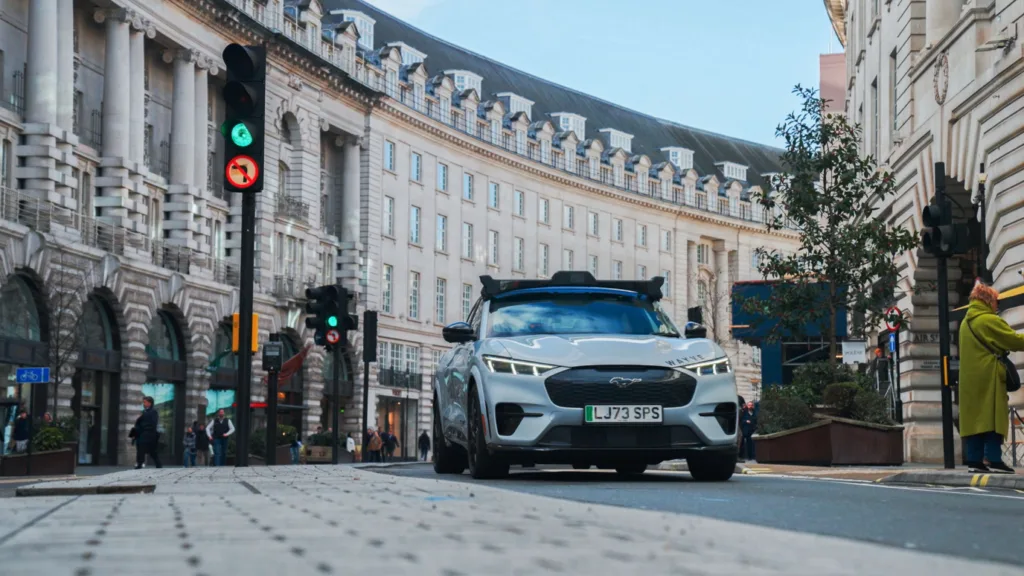
The future of travel is about to arrive on London’s streets after the capital gave the green light to its first fleet of robotaxis, with more than 100,000 people already signing up for the chance to experience a journey driven by artificial intelligence.
Transport for London (TfL) has granted private hire vehicle licences to a number of autonomous, all-electric Ford Mustang Mach-E vehicles developed by British self-driving technology company Wayve and operated through Uber.
The landmark approval means selected passengers will be invited to take the first commercial autonomous rides later this summer, ahead of a wider public launch.
But before anyone imagines empty front seats gliding through the capital, there is one important catch.
Every vehicle will initially carry a fully licensed private hire driver behind the wheel, ready to take control if needed, while the technology is assessed in real-world conditions.
If the trials prove successful, Uber and Wayve will still need separate approval from the Driver and Vehicle Standards Agency before the vehicles can operate without a human driver.
The self-driving cars are based on Ford’s all-electric Mustang Mach-E SUV and have been fitted with Wayve’s British-built autonomous driving system, supported by an array of cameras and radar that continuously monitor the road around them.
TfL confirmed that the vehicles underwent extensive safety assessments before licences were granted, and that experts are satisfied that the modifications do not compromise passenger safety.
Unlike many autonomous systems that rely on highly detailed maps and fixed routes, Wayve’s artificial intelligence has been trained to learn from experience, allowing it to adapt to unfamiliar roads, changing weather and the unpredictable nature of city driving, much like a human behind the wheel.
The company has been developing and testing its technology on London’s notoriously challenging streets since 2018, and says its AI has now demonstrated its capabilities in more than 500 cities worldwide.
The launch is a major milestone for Uber’s global autonomous ambitions. The ride-hailing giant now works with more than 30 autonomous vehicle partners worldwide and has already facilitated millions of autonomous journeys across its international network.
Sarah Gates, Wayve’s Vice President of Global Affairs and Assurance, described the approval as “an important step” towards enabling Londoners to experience autonomous driving, adding that the responsible deployment of the technology could create safer, cleaner and quieter streets.
Uber’s Global Head of Autonomous Mobility Operations, Annie Duvnjak, said the response from Londoners had been “incredible”, with huge demand from people eager to experience British-developed autonomous driving technology for themselves.
Not everyone is celebrating the arrival of robotaxis. The GMB Union, which represents thousands of private hire drivers, warned that the technology could have significant implications for the future of the profession.
GMB Union called for greater clarity on how drivers would be supported if autonomous vehicles eventually reduce demand for traditional taxi services, arguing that technology should not replace the experience, judgement and human connection offered by professional drivers.