
By: Mohammed Yousaf Aslam
“People have presumptions that our lives are bad and rubbish – but I genuinely believe I have a better life than 99% of people.”
It is not the answer one might expect from a man who has lived with a visual impairment for most of his life.
But for England international Azeem Amir, adversity has never been a limitation. Instead, it has become the lens through which perspective, purpose and success have come sharply into focus.
Football has always been central to Amir’s life. “It was something to talk about on a Monday morning, even in primary school, we’d talk about the football over the weekend,” he recalls.
“And inside or outside of school, you’d always find me with a ball at my feet.”
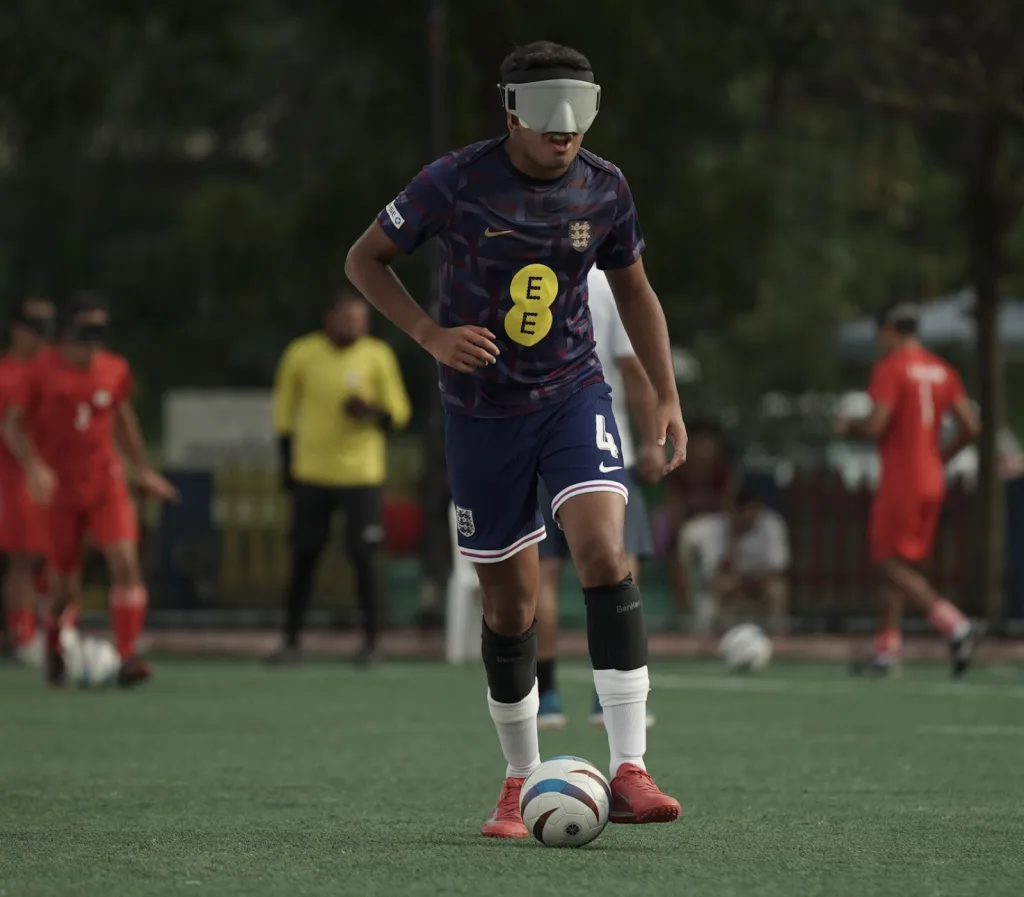
Born with severe sight loss, Azeem Amir has gone on to win more than 40 England caps, build a social enterprise and challenge society’s instinct to pity disability. For the 27-year-old blind footballer, adversity did not narrow life – it sharpened it.
Yet it was not until midway through high school that he discovered blind football, after a friend urged him to give it a try.
Initially sceptical about how the sport could function, he quickly came to understand its logic – and its fairness.
“It’s the most fair and equal game there is because apart from the goalkeeper, everyone’s vision is equally limited and you’re solely reliant on your listening skills.”
Born with a condition called Ocular Auricular Syndrome, Amir has no vision in his right eye and only light perception in his left – meaning he can make out lights, shades and shadows only from within an arm’s distance.
“When starting out in blind football, there was a long acclimatisation phase for me, because the little light perception I had was taken away, and I really had to hone in on my other senses,” he recalls.
“But I persevered, and within a few years I was told that I had the ability to play at a higher level. That’s when opportunities that I was so fortunate to have at a young age, started to arrive.”
Those opportunities came quickly. In 2018, aged 17, Amir was invited to senior England camps. A debut followed at a Grand Prix in Japan, opening the door to tournaments in Argentina, the United States, Brazil and across Europe. Before long, he had earned more than 40 senior caps for his country.
“I grew up watching Wayne Rooney, Frank Lampard, Steven Gerrard, and now I’m in a position where I’m singing the national anthem just like they used to,” he said.
“There’s a lot of challenges, dedication and a lot of time spent on the road, but it’s all worth it – I’m in such a privileged position. I’m literally living out a dream.”
Beyond the idea of ‘bachara’
Amir is acutely aware of the assumptions that surround blind football and encourages sceptics to attend a match for themselves, arguing that its relentless, end-to-end pace makes it a compelling spectacle.
But it is not only the sport that is misunderstood. The 27-year-old also pushes back against the instinctive pity often directed towards disabled people. He points to the Punjabi term ‘bachara’ – a word used to describe someone seen as pitied or unfortunate.
“They think we are ‘bachara’, but have they spoken to any of us?” he says.
“People’s first outlook is always negative but I live such an amazing life. I’m as far away from a ‘bachara’ as you could possibly imagine.
“A lot of this patronisation is based on a lack of education, which is why I’m so passionate about the work I’m doing.”
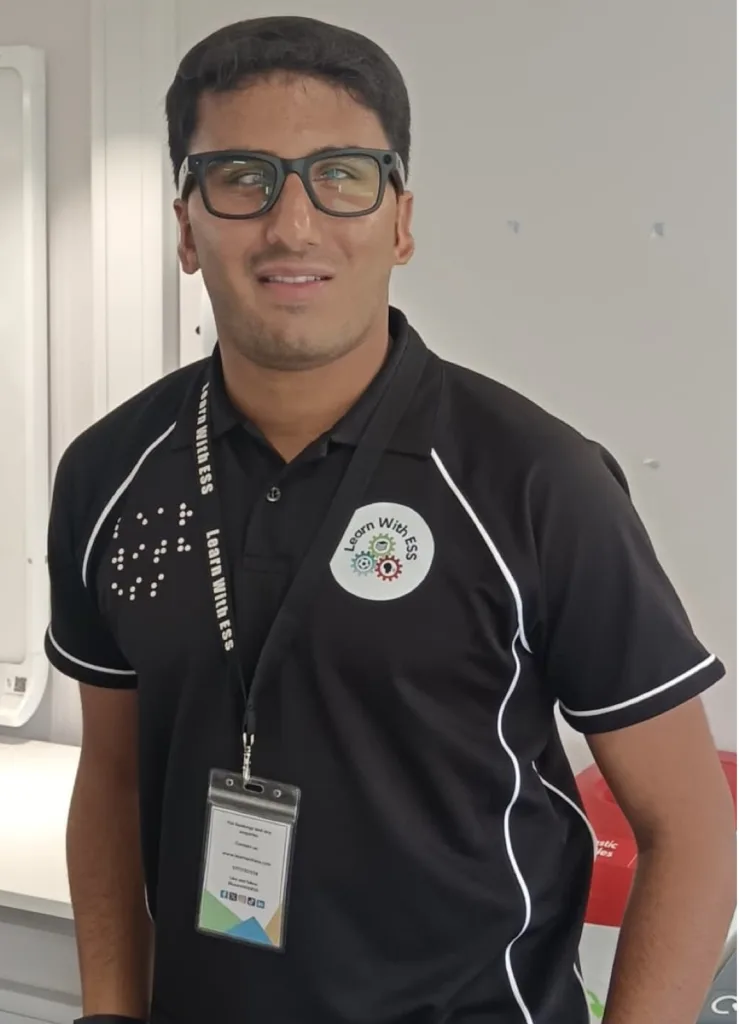
That work extends well beyond the pitch. Amir sits on the board of Learn with ESS – short for Education, Sport and Speaking – a social enterprise designed to challenge individual and societal perceptions of disability.
“We deliver these workshops where people from various organisations and companies – not necessarily in sport – get to experience what it’s like to live the life of someone with a disability,” he explains.
“I started it myself but over the past three years, we’re now a team of seven and we’ve worked with over 30,000 people.”
Balancing that work alongside elite sport presents its own demands. Amir describes managing what he calls a “dual-career” as the hardest part of his routine.
“It’s not easy. Far from it. But I love what I do and I’m very passionate about it.”
Perspective as a practice
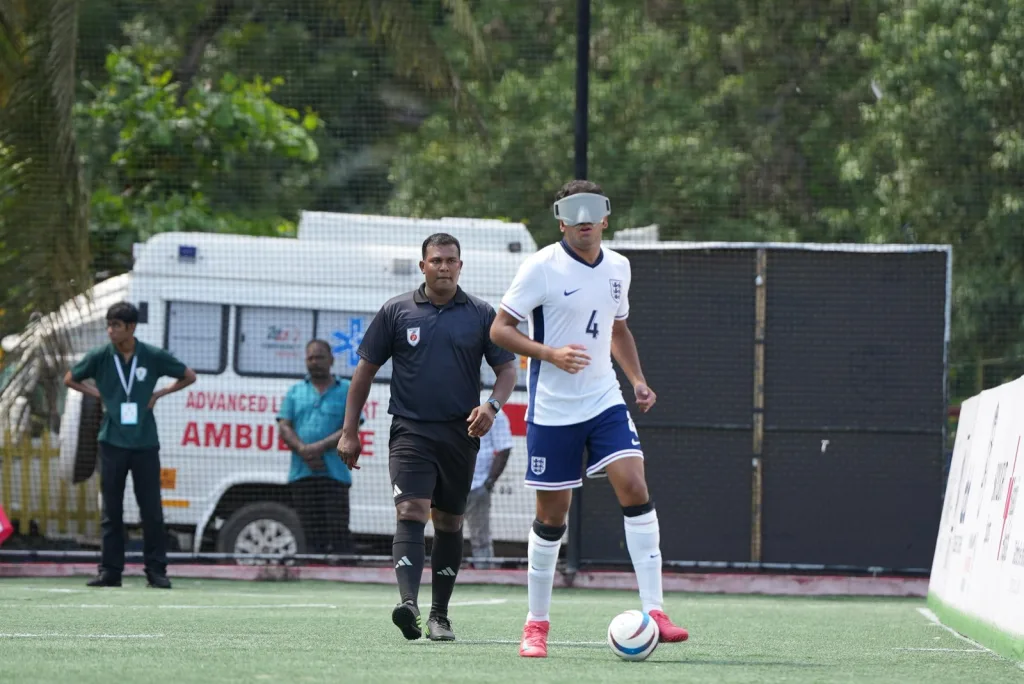
Blind football, he says, has changed more than his sporting life. It has reshaped the way he understands the world – and himself. “It’s taught me so many life skills around self-advocacy, confidence and communication skills, and I’m so grateful for that,” he says.
“I realised that I can either sit here and self loathe, or I can tap into things like perspective, gratitude and empathy. There are people out there who have it worse than me – people who may not be able to walk, speak or communicate.”
Of all the lessons he has learned, self-advocacy is the one he returns to most – particularly when speaking to younger people beginning to navigate life with a disability.
So when Amir says he has a better life than most, it is not bravado. It is gratitude, sharpened by adversity.
“If you can get to a point where you can comfortably speak about your condition and what help you need, all of a sudden you start to realise that the rest of the world starts to work around you rather than you working around the rest of the world.”