
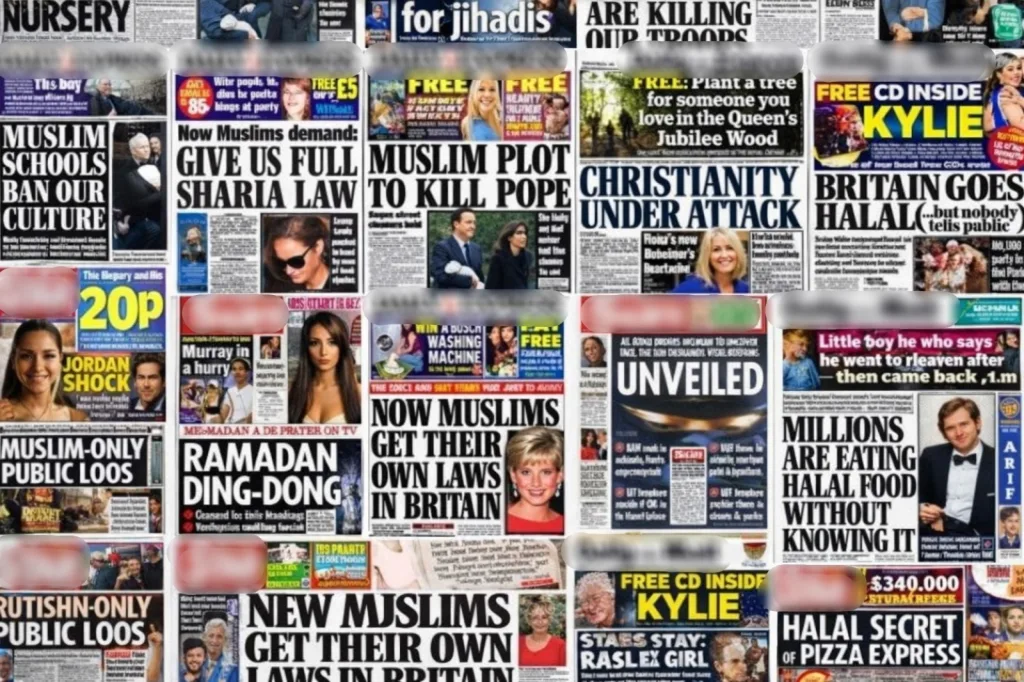
A landmark analysis of more than 40,000 news articles reveals systemic bias in the way British media reports on Muslims and Islam – reinforcing concerns long raised by community voices and publications such as Asian Express.
For years, Muslim communities in Britain have argued that they are viewed through a distorted lens by much of the national media.
Headlines that sensationalise, stories that generalise, and narratives that repeatedly frame Islam through conflict or crisis have long shaped public perception.
The study has laid bare the scale of the problem.
The Telegraph, Daily Mail and GB News alone account for nearly half of all “very biased” articles identified.
The ‘State of British Media 2025’ report, produced by the Centre for Media Monitoring (CfMM), analysed 40,913 articles across 30 major UK news outlets to examine how Muslims and Islam were represented in the press.
What it reveals is not the odd bias or editorial oversight. It reveals a system – nearly half of all articles about Muslims contained measurable bias, while 70% of coverage associated Muslims or Islam with negative behaviour or controversy.
The scale of the distortion
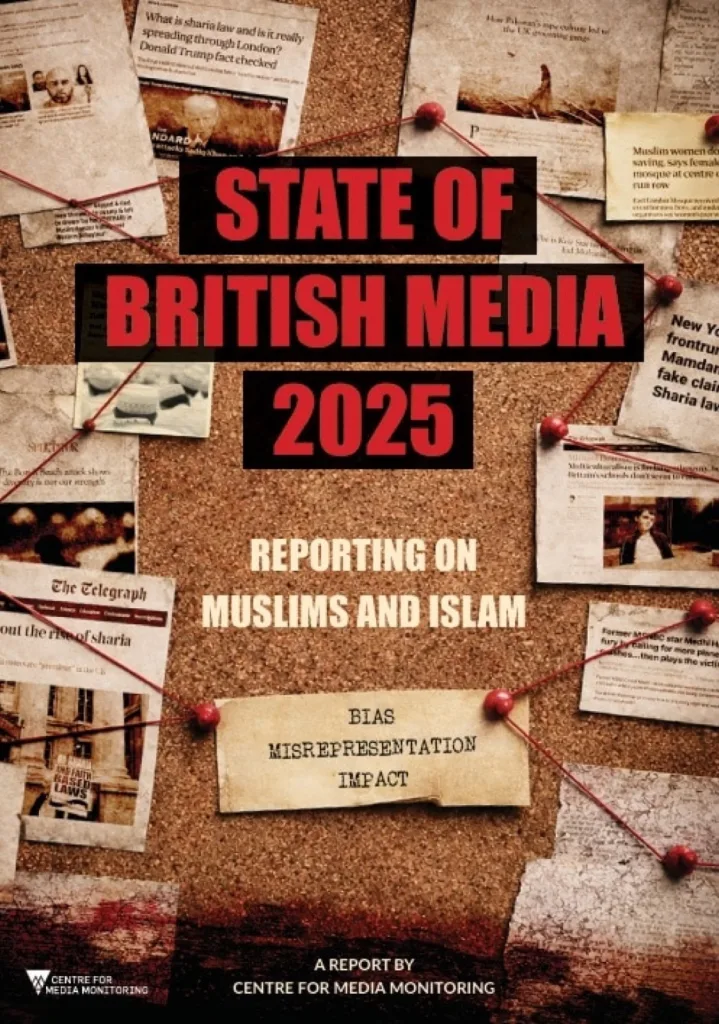
The study’s methodology was rigorous and unprecedented in scale. Researchers analysed tens of thousands of articles using measurable indicators of bias.
Articles were classified as “biased” when they contained patterns such as negative associations with Islam, sweeping generalisations, misrepresentation of facts, omission of context or sensationalist headlines.
The results were damning.
Of the 40,913 articles examined, 16,570 were categorised as biased and a further 2,044 as “very biased” – the most severe form of distortion.
These are not marginal figures. They represent a media environment where biased portrayals of Muslims are not exceptions – they are routine, and they are determinedly regular.
The report identifies a cluster of publications responsible for a disproportionate share of the worst coverage.
The Telegraph, Daily Mail and GB News alone account for nearly half of all “very biased” articles identified in the study. These news outlets shape almost half of the most distorted reporting about Muslims.
Other outlets, including The Spectator and Daily Express, also recorded alarmingly high levels of biased content.
Such patterns strongly suggest that anti-Muslim framing is not merely accidental but embedded within the editorial cultures of parts of the British media.
The power of headlines
The study also exposes how Muslims are disproportionately associated with conflict and political controversy.
The two dominant themes in coverage of Muslims were politics and governance (30.7%) and conflict or terrorism (18.7%) – meaning Muslims are most frequently discussed in contexts of political tension or security threat.
Stories about everyday life, culture or positive contributions appear far less frequently.
The cumulative effect is powerful.
When audiences repeatedly encounter Muslims only in stories about extremism, crime or controversy, the impression created is that these issues define the community itself.
Over time, this frames the entire Muslim population into a permanent subject of suspicion.
Another deeply troubling finding is the scale of contextual omission: Nearly 44% of biased articles failed to provide crucial context, meaning readers were often presented with incomplete or misleading narratives.
In practical terms, this might involve failing to explain legal realities, ignoring Muslim voices in stories about Muslim communities, or presenting isolated incidents as representative of wider social patterns.
One case highlighted in the report involved media coverage of claims that London is governed by “Sharia law”.
Although some outlets debunked the conspiracy, others repeated the claim in ways that blurred fact and fiction – allowing misinformation to circulate under the appearance of legitimate debate.
The power of collective blame
Perhaps the most insidious feature of the coverage identified in the study is the use of generalisation.
In many articles, the actions of individuals are implicitly linked to the wider Muslim community – a crime committed by one person becomes a reflection of a faith.
A political controversy involving one individual becomes a commentary on millions.
This standard is rarely applied elsewhere.
When perpetrators of crimes are white or Christian, their identity is almost never treated as representative of an entire group.
But when the subject is Muslim, the line between individual and community is frequently erased.
Warnings ignored for 25 years
For readers of Asian Express, these findings will feel painfully familiar.
For more than 25 years, the newspaper has documented examples of misrepresentation, challenged distorted narratives and highlighted the voices too often excluded from mainstream media.
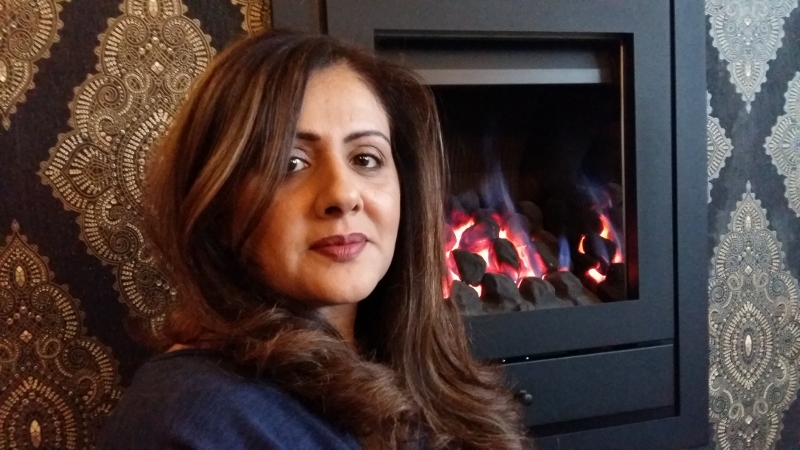
Andleeb Hanif, managing editor of Asian Express, says: “From sensationalist reporting around terrorism to racialised coverage of crime or immigration, this pattern of media bias has been repeatedly identified long before it was quantified by academic research.
“What this report provides is statistical confirmation, that being – the concerns raised by Muslim communities were not exaggerated. They were simply dismissed.
“The question now is, whether Britain’s media is willing to confront its own role in shaping prejudice – or whether it will continue to feed a narrative that millions of its citizens know all too well?”