


Sponsored Content from Milkaid, a lactase enzyme brand, offering a wide range of convenient, great tasting food supplements designed to help people who have difficulty digesting lactose continue to enjoy milk, cheese, yoghurt and other dairy products with confidence.

Digestive discomfort after drinking milk or eating dairy is something many people experience at some point.
For some, however, symptoms such as bloating, abdominal pain, wind or diarrhoea occur regularly after consuming dairy products. In many cases, the underlying cause is lactose intolerance – a common but often misunderstood condition.
Globally, lactose intolerance affects the majority of adults. Yet its prevalence is not evenly distributed. People of South Asian heritage are among the populations most likely to experience it, which makes understanding the condition particularly important in diverse societies such as the UK.
What is lactose intolerance?

Lactose is the naturally occurring sugar found in milk and dairy foods. To digest it properly, the body relies on an enzyme called lactase, produced in the small intestine. Lactase breaks lactose into two smaller sugars, glucose and galactose, which can then be absorbed into the bloodstream.
In individuals with lactose intolerance, lactase activity is reduced. As a result, lactose passes undigested into the large intestine, where it is fermented by gut bacteria. This fermentation produces gases and draws water into the bowel, leading to symptoms including bloating, cramps, flatulence and diarrhoea.
Why prevalence differs across populations
The ability to digest lactose in adulthood is determined largely by genetics. In many parts of the world, lactase production naturally declines after childhood – a pattern known as lactase non-persistence.
Research consistently shows that lactose intolerance is highly prevalent among South Asian populations. Previous studies and systematic review estimate that between 60% and 80% of adults of South Asian origin experience lactose malabsorption.
For healthcare professionals, recognising these differences is important. Digestive symptoms such as bloating or abdominal discomfort may sometimes be attributed to conditions like Irritable bowel syndrome when lactose intolerance could also be contributing.
Dairy in South Asian diets
Despite the high prevalence of lactose intolerance, dairy remains central to many South Asian cuisines. Milk, yoghurt, paneer and traditional desserts made with milk are widely used in everyday cooking and celebrations.
Interestingly, many people with lactose intolerance can still tolerate some dairy foods. The amount of lactose in different products varies considerably, and symptoms are often dose dependent.
Fermented dairy products such as yoghurt are often easier to digest because bacteria partially break down lactose during fermentation. Hard cheeses (such as cheddar and parmesan) also tend to contain very little lactose. Eating dairy as part of a meal rather than on its own may further improve tolerance by slowing digestion. Alongside these approaches, some individuals may find lactase supplements, such as Milkaid, useful when consuming dairy foods.
Avoiding dairy is not always the best solution
One common misconception is that lactose intolerance requires complete elimination of dairy. In reality, unnecessary avoidance can sometimes lead to nutritional gaps.
Dairy foods are major contributors of calcium, iodine, riboflavin and high-quality protein in many diets. In the UK, milk and dairy products provide roughly one third of total dietary calcium intake. Removing them without suitable alternatives may increase the risk of inadequate intake of these nutrients.
Indeed, studies have found that lower calcium intake and reduced dairy consumption were associated with poorer bone mineral density and a higher risk of fragility fractures and osteoporosis.
For communities where lactose intolerance is common, the focus is therefore often on identifying tolerable amounts of dairy rather than eliminating it entirely. Emerging research is exploring the efficacy of dietary changes combined with lactase supplements such as Milkaid.
Dietitians frequently encourage individuals to experiment with portion sizes, try lower-lactose foods and monitor their personal tolerance levels. This approach allows many people to continue enjoying culturally important foods without discomfort.
The role of lactase supplements
Another strategy supported by research is lactase enzyme supplementation. These products provide the enzyme needed to break down lactose and are typically taken just before consuming dairy foods.
Recent clinical evidence suggests this approach can be effective. A randomised controlled trial reported that lactase supplementation can reduce symptoms such as bloating, abdominal pain and wind compared with a placebo in individuals with lactose malabsorption. Previous reviews similarly concluded that these preparations can improve lactose digestion and reduce gastrointestinal symptoms in many people.
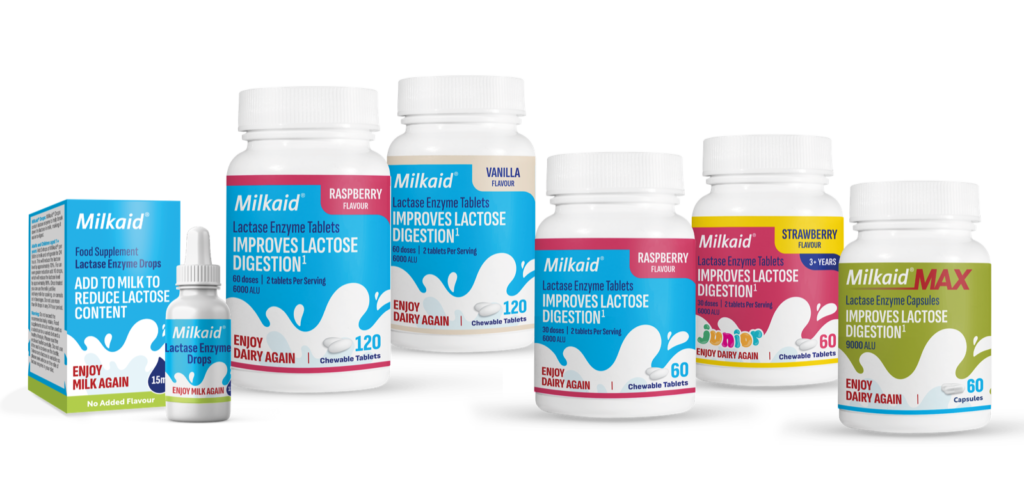
For individuals who wish to continue enjoying dairy foods in social or cultural settings, lactase supplements can provide flexibility. Products such as Milkaid contain lactase enzyme designed to help digest lactose when dairy is consumed.
A balanced approach to lactose intolerance
Lactose intolerance exists on a spectrum. Some individuals are highly sensitive to even small amounts of lactose, while others can tolerate moderate quantities without symptoms. This variability highlights the importance of personalised dietary advice.
For many people, effective management involves a combination of strategies: understanding personal tolerance levels, choosing lower-lactose foods, and using lactase supplements when needed.
As awareness grows, it is increasingly clear that lactose intolerance does not have to mean giving up dairy altogether. With the right knowledge and practical strategies, most individuals can maintain both digestive comfort and a nutritionally balanced diet.
Milkaid’s chewable tablets are available in Holland & Barrett, Tesco and Boots. To purchase the full Milkaid range, shoppers can visit Amazon. RRP from £8.99.